Rinnai Water Heater PC Board Issues? How to Fix Them Fast
- homeappliances003
- May 4
- 6 min read
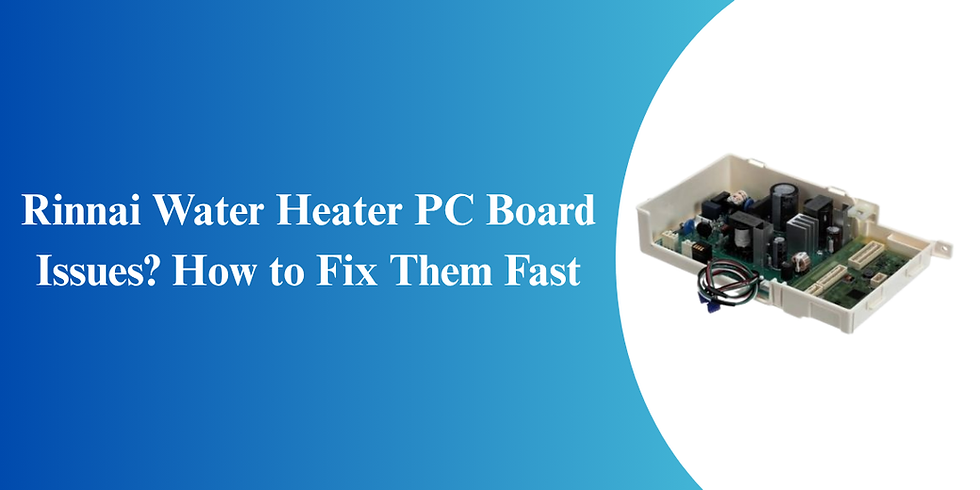
A Rinnai water heater relies on its PC board to manage ignition, temperature control, and operational safety. When this component begins to fail, the system may show error codes, inconsistent heating, or sudden shutdowns. These disruptions often indicate deeper electrical or control-related concerns that require structured evaluation. Instead of focusing only on visible symptoms, it is important to assess signal flow, sensor response, and power distribution within the unit.
In many cases, homeowners notice irregular performance in a home appliance when the control board starts malfunctioning. Identifying the root cause early can prevent extended downtime and unnecessary part replacements.
The Following Sections Focus On:
Common causes behind Rinnai water heater PC board issues
Key failure indicators affecting system performance and control
Quick fixes to restore Rinnai water heater functionality
Practical tips to prevent recurring PC board problems
This article presents a structured framework to identify, analyze, and resolve PC board issues efficiently, ensuring accurate evaluation and improved system performance.
Common Causes of PC Board Issues in a Rinnai Water Heater
Understanding the causes of control board failures ensures consistent systems performance, as PC board issues often result from electrical irregularities, component wear, or signal disruptions affecting internal communication.
Electrical Power Supply Fluctuations
Irregular voltage or sudden interruptions can damage components in a Rinnai water heater. These fluctuations often trigger Rinnai water heater error codes, indicating unstable operation and gradually weakening control board reliability over time.
Sensor Malfunction And Misalignment
Faulty or misaligned sensors disrupt system communication, causing incorrect responses. A Rinnai water heater sensor problem may lead to inaccurate readings or delayed activation, affecting overall performance and system reliability.
Internal Component Wear Over Time
Continuous operation can reduce internal circuit efficiency over time. In a Rinnai water heater, extended use may cause delayed response and inconsistent functionality, affecting how the PC board processes and transmits control signals effectively.
Wiring Connections And Signal Interruptions
Loose or damaged wiring can disrupt electrical flow in a Rinnai water heater, leading to irregular operation or shutdowns. Homeowners may notice instability in a home appliance when signal transmission becomes inconsistent.
Reset Function And Control Failure
When a system does not respond to reset attempts, it often signals control board malfunction. A Rinnai water heater reset not working condition suggests the board cannot process commands, preventing the unit from restoring normal operation after faults.
Step-by-Step Instructions to Fix Rinnai Water Heater PC Board Issues Quickly
Addressing PC board issues requires a structured approach that focuses on identifying faults, verifying system response, and restoring proper functionality. By following a clear sequence, it becomes easier to resolve control-related problems efficiently and maintain consistent performance.
# Step 1: Check Power Supply And Connections
A stable power source is essential for proper operation. Begin by verifying that the unit receives consistent voltage and that all electrical connections are secure. Many Rinnai water heater error codes are triggered by interruptions in power flow or loose wiring.
Inspect circuit breakers and power switches
Tighten loose wiring connections around the control board
Check for visible signs of wear or damaged connectors
Confirm steady power input before proceeding
For homeowners, ensuring proper electrical flow in a home appliance can often resolve minor issues without further intervention in a Rinnai water heater.
# Step 2: Verify Voltage Stability And Input Flow
Even when power is available, inconsistent voltage can disrupt control board communication and system response. This often leads to repeated faults or irregular operation in a Rinnai water heater.
Measure incoming voltage using a multimeter
Ensure voltage matches required specifications
Inspect power cords for internal damage
Confirm proper grounding connections
Maintaining voltage stability improves reliability and reduces unexpected shutdowns in a home appliance.
# Step 3: Inspect Sensors And Signal Response
Sensors provide essential data to the control board for regulating ignition and temperature. A Rinnai water heater sensor problem can interrupt communication, causing inconsistent heating or system shutdowns.
Examine sensor alignment and placement
Check for dirt, corrosion, or loose connections
Verify accurate signal transmission to the board
Replace faulty sensors if irregular readings persist
A Rinnai water heater depends on accurate sensor input to maintain consistent performance.
# Step 4: Examine Internal Wiring And Harness Connections
Wiring harnesses connect the control board to multiple components. Any disruption in these connections can lead to signal loss or delayed response.
Inspect wiring harnesses for loose or disconnected ends
Look for insulation damage or overheating marks
Ensure connectors are securely attached
Replace damaged wiring where necessary
For homeowners, checking wiring integrity in a home appliance helps prevent recurring electrical faults in a Rinnai water heater.
# Step 5: Clean Control Board And Contact Points
Accumulated dust or residue can interfere with electrical contact and signal transmission. Cleaning the control board ensures proper interaction between components.
Use a dry, soft brush to remove debris
Clean connector terminals carefully
Avoid moisture or liquid cleaners
Inspect for corrosion or buildup
Regular maintenance supports stable operation in a Rinnai water heater.
# Step 6: Perform Reset And System Recheck
Resetting the unit can clear temporary faults and restore normal function. However, a Rinnai water heater reset not working condition may indicate deeper control board issues.
Turn off the unit and disconnect power briefly
Restart the system and monitor response
Observe whether error codes reappear
Evaluate system behavior after reset
For homeowners, a reset may improve performance in a home appliance, but repeated failures suggest underlying issues in the Rinnai water heater.
# Step 7: Check Ignition And Flame Detection Signals
The control board relies on ignition and flame sensors to confirm heating cycles. Weak or inconsistent signals can prevent proper operation.
Inspect ignition components for alignment
Clean and position flame sensors correctly
Ensure signal pathways are unobstructed
Replace faulty ignition-related components
A Rinnai water heater requires accurate detection signals to maintain stable heating performance.
# Step 8: Replace Or Repair Control Board
If all previous steps fail to resolve the issue, the PC board itself may require repair or replacement. Persistent faults and repeated Rinnai water heater error codes often indicate internal damage.
Inspect the board for burn marks or corrosion
Verify all connections are secure
Replace the control board if damage is visible
Test the system after installation
A properly functioning control board restores efficiency and ensures that a Rinnai water heater operates with consistent temperature control and reliability.
Preventive Tips to Avoid PC Board Problems in a Rinnai Water Heater
Preventing control board issues requires consistent monitoring and proper system handling. Small adjustments and regular checks can significantly reduce the risk of unexpected failures and maintain stable performance over time.
Regular System Inspections: Routine inspections help detect early signs like Rinnai water heater error codes, enabling homeowners to maintain a Rinnai water heater efficiently and prevent long-term control board issues in a home appliance.
Maintain Sensor Accuracy: Sensor reliability ensures consistent performance. A Rinnai water heater sensor problem can disrupt temperature control and system response. Regular evaluation helps maintain stable operation and consistent heating output.
Ensure Proper Reset Function: A Rinnai water heater reset not working may indicate deeper electrical issues; proper reset functionality helps homeowners maintain control and prevent recurring PC board problems.
Conclusion : Accurate Evaluation Restores Reliable Water Heating Performance
Consistent operation depends on identifying control board issues early and applying the right corrective approach. Signs such as Rinnai water heater error codes or a Rinnai water heater reset not working often indicate deeper electrical concerns. For homeowners, evaluating a Rinnai water heater helps determine whether repair or replacement is required. A home appliance showing irregular heating may also be affected by a Rinnai water heater sensor problem, requiring careful inspection. Reviewing system behavior and component interaction ensures better decisions. A structured assessment of a Rinnai water heater supports reliable performance and consistent temperature control over time.
HnK Parts provides reliable home and kitchen repair parts, including dishwasher parts, washing machine components, and dryer parts, with quick shipping designed to support efficient home appliance maintenance.
Frequently Asked Questions (FAQ's)
1. Why does my Rinnai water heater take so long to heat up?
Delayed heating may result from low gas supply, restricted water flow, or sensor inaccuracies. Scale buildup and control board delays can also affect response time. Regular inspection of system components ensures consistent heating performance and reduces operational delays.
2. How long do Rinnai hot water heaters last?
Rinnai water heaters typically last between 10 to 20 years, depending on usage, maintenance, and water quality. Routine servicing, timely component replacement, and proper installation contribute to extended durability and consistent long-term performance.
3. What are the first signs of a water heater going bad?
Early signs include inconsistent water temperature, unusual noises, error codes, and reduced heating efficiency. Delayed ignition or frequent shutdowns may also indicate developing issues. Identifying these symptoms early allows for timely repairs and prevents major system failures.


Comments